Reliable electrical infrastructure is essential for every industrial, commercial, and production facility. From powering machinery and HVAC equipment to supporting automation systems, lighting, safety devices, and critical operations, electrical systems directly influence productivity, operational continuity, energy efficiency, and workplace safety.
In Dubai and across the UAE, electrical installations must be carefully planned, professionally executed, thoroughly tested, and regularly maintained. Industrial environments are particularly demanding because they often involve high electrical loads, continuous equipment operation, specialised machinery, automation systems, and strict safety requirements.
Choosing an experienced electrical contractor in Dubai helps ensure that electrical systems are designed and installed according to project requirements, operational demands, and applicable authority standards.
This guide explains the main components of industrial electrical services in the UAE, the importance of professional installation and maintenance, and the factors businesses should consider when selecting an electrical contracting partner.
What Are Industrial Electrical Services?
Industrial electrical services include the planning, installation, testing, commissioning, maintenance, repair, and upgrading of electrical systems in factories, warehouses, processing plants, workshops, farms, logistics facilities, and other operational environments.
Unlike standard residential installations, industrial electrical systems are usually more complex. They must support heavy machinery, motors, control panels, production equipment, ventilation systems, pumps, automation devices, and high-capacity power distribution networks.
A complete industrial electrical scope may include:
● Electrical load assessment
● Power distribution planning
● Electrical containment systems
● Cable tray and trunking installation
● LV switchgear installation
● Main distribution boards
● Sub-main distribution boards
● Electrical panel installation
● Motor control centres
● Power and control cabling
● Earthing and bonding systems
● Industrial lighting systems
● Emergency lighting
● Machinery electrical connections
● Automation and control wiring
● Electrical testing and commissioning
● Preventive and corrective maintenance
● Electrical system upgrades
● Power quality assessments
● Industrial power audits
A qualified electrical installation contractor in the UAE coordinates these elements to create a safe, reliable, and efficient electrical system.
Why Industrial Electrical Systems Require Specialist Expertise
Industrial facilities have electrical requirements that are significantly different from those of homes or small offices.
Factories, food processing plants, bottling facilities, poultry farms, warehouses, and machinery-based operations often contain several interconnected systems. A problem in one electrical component may affect production equipment, ventilation, refrigeration, lighting, automation, or safety systems.
Industrial electrical work requires detailed technical knowledge because contractors must consider:
● Equipment power ratings
● Starting currents
● Load diversity
● Cable sizing
● Voltage drop
● Short-circuit protection
● Equipment isolation
● Motor control requirements
● Control panel integration
● Environmental conditions
● Emergency power requirements
● Future expansion capacity
● Maintenance access
● Operational safety
An experienced industrial contractor evaluates the complete operating environment rather than treating each electrical installation as an isolated task.
Core Industrial Electrical Services in Dubai 1. Electrical Design Review and Load Assessment
Every reliable electrical installation begins with proper planning.
Before installation, the contractor should review the project drawings, equipment schedules, electrical loads, machinery requirements, distribution routes, and future operational needs.
Electrical load assessment helps determine:
● Required incoming power capacity
● Transformer and generator requirements
● Main distribution board capacity
● Cable sizes
● Circuit protection ratings
● Panel configurations
● Machinery power requirements
● Emergency power demand
● Future expansion allowances
Incorrect load calculations can lead to overloaded circuits, frequent tripping, voltage instability, equipment damage, and production interruptions.
A professional electrical contractor in Dubai ensures that the distribution system is appropriate for both current and anticipated electrical demand.
2. Power Distribution Systems
Power distribution is the foundation of an industrial electrical network.
Electricity must be safely distributed from the incoming supply to switchgear, distribution boards, machinery, HVAC systems, pumps, lighting, automation equipment, and other electrical loads.
A typical industrial power distribution system may include:
● Main electrical rooms
● LV switchgear
● Main distribution boards
● Sub-main distribution boards
● Final distribution boards
● Busbar systems
● Cable containment
● Power cabling
● Isolation devices
● Protection systems
● Earthing systems
Proper distribution planning improves reliability, simplifies maintenance, and reduces the risk of equipment shutdowns.
3. LV Switchgear Installation in Dubai
Low-voltage switchgear controls, protects, and isolates electrical circuits throughout a facility.
It plays a critical role in preventing equipment damage and protecting electrical systems against overloads, short circuits, and other faults.
Professional LV switchgear installation in Dubai may include:
● Main switchboards
● Air circuit breakers
● Moulded-case circuit breakers
● Busbar systems
● Automatic transfer switches
● Metering systems
● Protection relays
● Capacitor banks
● Feeder panels
● Control devices
● Emergency isolation systems
Switchgear must be correctly rated, properly installed, clearly labelled, and accessible for maintenance.
Incorrect installation can create overheating, nuisance tripping, poor protection coordination, and serious safety risks.
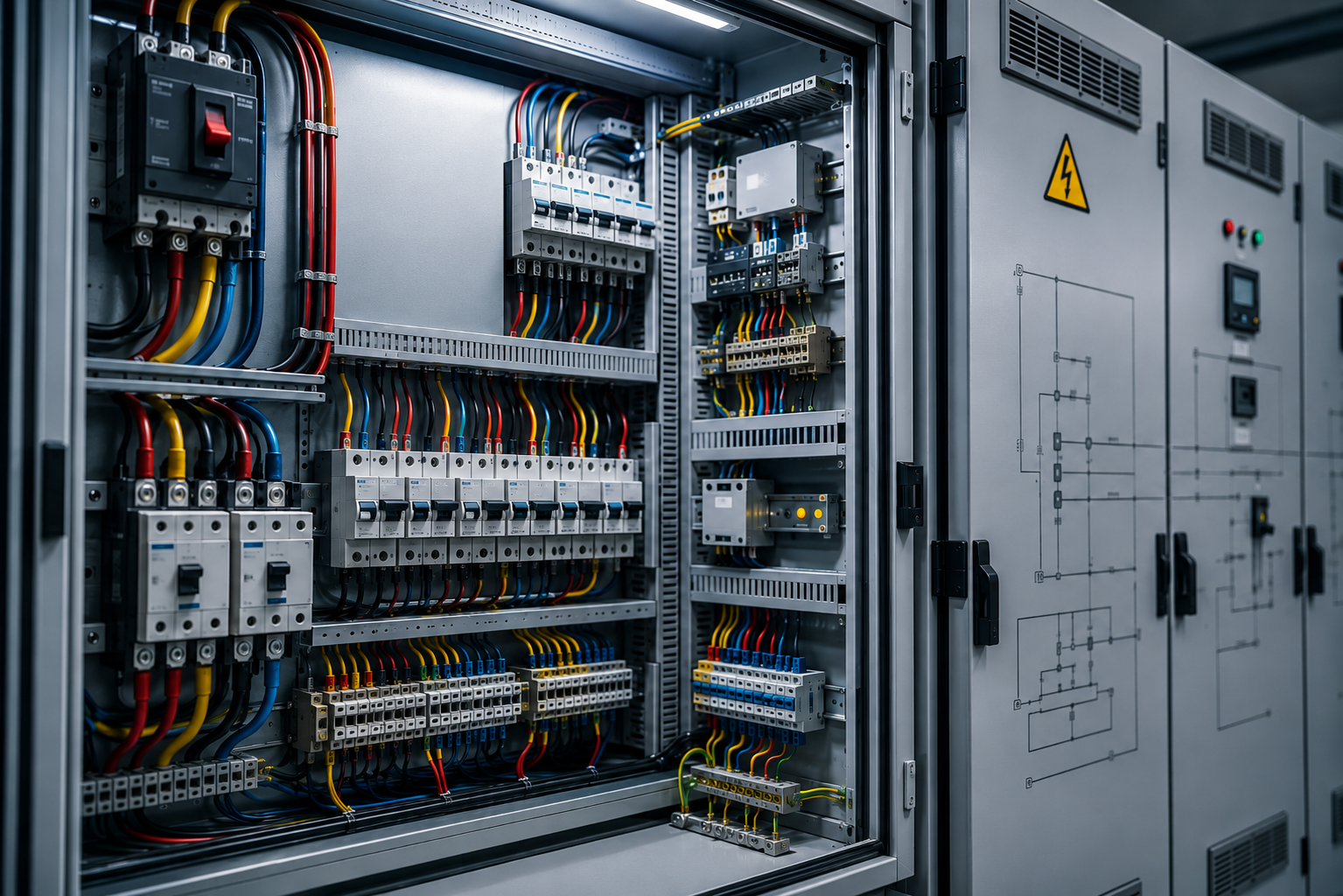
4. Electrical Panel Installation in the UAE
Electrical panels distribute power and provide control, monitoring, and protection for different areas and equipment.
Industrial projects may require several types of panels, including:
● Main distribution boards
● Sub-main distribution boards
● Final distribution boards
● Motor control centres
● Control panels
● Automatic transfer switch panels
● Variable-frequency drive panels
● Pump control panels
● HVAC control panels
● Machinery interface panels
● Automation panels
Professional electrical panel installation in the UAE includes positioning, mounting, cable termination, earthing, labelling, testing, and integration with connected equipment.
Panels must also provide sufficient access for safe operation, inspection, and future maintenance.
5. Cable Containment and Electrical Cabling
Industrial facilities often require extensive power and control cabling.
These cables must be organised, protected, and routed in a way that supports safety, accessibility, and long-term maintenance.
Common containment systems include:
● Cable trays
● Cable ladders
● Trunking
● Conduits
● Underground ducts
● Floor trunking
● Flexible containment
● Junction boxes
The contractor must coordinate containment routes with HVAC ducts, plumbing systems, fire protection lines, machinery, structural elements, and access zones.
Cable installation should consider:
● Cable load capacity
● Heat dissipation
● Bend radius
● Separation between power and control cables
● Environmental exposure
● Mechanical protection
● Fire-resistant requirements
● Future expansion
● Maintenance access
Poor cable management can cause overheating, signal interference, difficult maintenance, and unsafe working conditions.
Machinery Electrical Connections
Industrial machinery requires more than a standard electrical connection.
Each machine may have specific voltage, load, protection, isolation, earthing, control, and automation requirements.
Machinery electrical services may include:
● Equipment load verification
● Power cable installation
● Local isolator installation
● Control cable installation
● Motor connections
● Variable-frequency drive integration
● Sensor wiring
● Emergency stop integration
● Panel modifications
● Earthing and bonding
● Startup support
● Functional testing
A capable industrial electrical contractor coordinates with machinery suppliers, automation teams, mechanical contractors, and production engineers to ensure that each machine operates safely and correctly.
This is especially important in bottling plants, food processing facilities, factories, poultry farms, warehouses, workshops, and automated production environments.
Commercial Electrical Services in Dubai
Industrial contractors may also provide commercial electrical services in Dubai for offices, retail facilities, showrooms, warehouses, hospitality projects, and mixed-use buildings.
Commercial electrical services may include:
● Power distribution
● Lighting installation
● Emergency lighting
● Small power systems
● Electrical panels
● UPS systems
● Generator connections
● Earthing systems
● Cable containment
● Low-current coordination
● Electrical maintenance
● Testing and commissioning
Although commercial systems may involve smaller loads than heavy industrial facilities, they still require accurate planning, professional installation, and compliance with project and authority requirements.
Industrial Lighting Systems
Lighting affects safety, productivity, energy consumption, and working conditions.
Industrial lighting design must account for the specific activities taking place in each area.
For example:
● Production zones require consistent task lighting
● Warehouses need clear aisle and racking illumination
● Workshops need high-visibility lighting
● Electrical rooms require safe maintenance lighting
● External yards require weather-resistant fixtures
● Food processing areas may require hygienic fittings
● Poultry facilities require lighting suited to operational and animal-management requirements
● Emergency routes require dependable backup lighting
Modern industrial lighting systems may include LED fixtures, occupancy sensors, timers, daylight controls, emergency lighting, and centralised monitoring.
Energy-efficient lighting can reduce electricity consumption while improving visibility and safety.
Earthing and Bonding Systems
Earthing is one of the most important elements of electrical safety.
A properly installed earthing system helps protect people and equipment by providing a controlled path for fault current.
Industrial earthing services may include:
● Earth pit installation
● Earth electrodes
● Earth conductors
● Equipment bonding
● Panel earthing
● Machinery earthing
● Cable tray bonding
● Structural bonding
● Earth resistance testing
Poor earthing can increase the risk of electric shock, equipment failure, unstable control signals, and fire.
Earthing systems should be tested periodically to confirm that they remain effective. Electrical Testing and Commissioning
Installation is not complete until the electrical system has been inspected, tested, and commissioned.
Professional electrical testing and commissioning confirms that circuits, panels, cables, protection devices, and connected equipment have been installed correctly and operate safely.
Testing activities may include:
● Visual inspections
● Continuity testing
● Insulation resistance testing
● Earth resistance testing
● Polarity testing
● Phase sequence checks
● Cable testing
● Circuit breaker testing
● Protection relay testing
● Panel functional testing
● Load testing
● Voltage measurements
● Current measurements
● Equipment startup checks
● Emergency shutdown tests
● Control system verification
Commissioning also helps identify loose connections, incorrect terminations, circuit faults, unbalanced loads, and equipment integration issues before the system enters full operation.
Why Electrical Commissioning Matters
Skipping or rushing commissioning can result in hidden faults that only become visible after the facility begins operating.
These faults may lead to:
● Unexpected equipment shutdowns
● Circuit breaker trips
● Motor rotation issues
● Cable overheating
● Voltage instability
● Damaged machinery
● Safety risks
● Production delays
A structured commissioning process provides greater confidence that the system is ready for safe and reliable operation.
Electrical Maintenance Services in Dubai
Even a well-designed electrical system requires regular maintenance.
Dust, heat, humidity, vibration, heavy equipment use, loose connections, and ageing components can gradually affect system performance.
Professional electrical maintenance services in Dubai help identify problems before they result in breakdowns or operational interruptions.
Preventive Electrical Maintenance
Preventive maintenance is performed according to a planned schedule. It may include:
● Electrical panel inspection
● Tightening of connections
● Cleaning of panels and equipment
● Circuit breaker inspection
● Cable condition checks
● Earth connection inspection
● Thermal scanning
● Voltage and current measurement
● Load balance checks
● Capacitor bank inspection
● Emergency lighting tests
● Generator and transfer switch checks
● Machinery connection inspections
● Documentation updates
Preventive maintenance reduces the likelihood of unexpected failures and extends the service life of electrical equipment.
Corrective Electrical Maintenance
Corrective maintenance is carried out when a fault has already occurred. Common issues may include:
● Repeated circuit tripping
● Damaged cables
● Loose terminations
● Burnt components
● Motor control failures
● Panel overheating
● Lighting faults
● Voltage fluctuations
● Earth leakage
● Equipment power loss
A qualified contractor should identify the root cause rather than simply resetting breakers or replacing damaged components without further investigation.
Thermal Inspection and Electrical Hotspot Detection
Loose or overloaded electrical connections often generate excessive heat before visible failure occurs.
Thermal inspection can help identify abnormal temperatures in:
● Switchgear
● Distribution boards
● Busbar connections
● Circuit breakers
● Cable terminations
● Motor control centres
● Machinery connections
● Capacitor banks
Early detection allows corrective action before overheating causes equipment damage, fire, or production shutdown.
Thermal inspection is particularly valuable in facilities with continuous operations or high electrical loads.
Industrial Power Audits in the UAE
An industrial power audit in the UAE examines how electricity is distributed and consumed across a facility.
The purpose is to identify inefficiencies, overloaded systems, poor power quality, unnecessary consumption, and opportunities for improvement.
A power audit may review:
● Facility load profile
● Maximum demand
● Power factor
● Voltage levels
● Current levels
● Load balance
● Harmonic distortion
● Machinery energy consumption
● HVAC electrical demand
● Lighting consumption
● Transformer loading
● Distribution losses
● Peak demand patterns
Benefits of an Industrial Power Audit
A professional power audit can help businesses:
● Reduce electricity consumption
● Improve power factor
● Identify overloaded circuits
● Balance electrical loads
● Reduce equipment stress
● Plan future capacity
● Improve system reliability
● Detect abnormal energy use
● Support sustainability goals
● Reduce operational costs
For energy-intensive facilities, even small improvements in power distribution and equipment operation can produce meaningful long-term savings.
Power Quality and Industrial Equipment Performance
Power quality has a major influence on machinery and automation systems.
Voltage fluctuations, harmonics, phase imbalance, and poor power factor can affect motors, drives, control panels, sensors, programmable logic controllers, and other sensitive equipment.
Poor power quality may cause:
● Equipment overheating
● Motor inefficiency
● Control system faults
● Unplanned shutdowns
● Reduced equipment life
● Increased electricity costs
● Capacitor failure
● Nuisance tripping
● Data and communication errors
Industrial electrical contractors may use specialised instruments to evaluate power quality and recommend corrective measures.
These may include load balancing, capacitor banks, harmonic filters, protection adjustments, cable upgrades, or distribution system modifications.
Electrical Safety in Industrial Facilities
Electrical safety must be integrated into every stage of installation, operation, and maintenance.
Industrial electrical work presents risks including electric shock, arc flash, fire, equipment damage, and production disruption.
Safe working practices should include:
● Proper isolation procedures
● Lockout and tagout controls
● Verified circuit identification
● Correct PPE
● Insulated tools
● Safe access to panels
● Clear equipment labelling
● Warning signage
● Controlled energisation
● Competent supervision
● Documented testing
● Permit-to-work procedures
Electrical rooms and panels should remain clear of storage, moisture, and unauthorised access.
Maintenance teams should also receive accurate drawings, circuit schedules, test records, and operating instructions.
Authority Coordination and DEWA Requirements
Electrical projects in Dubai may require coordination with Dubai Electricity and Water Authority and other relevant authorities, depending on the project type, load, location, and scope.
Clients searching for a DEWA-approved electrical contractor should verify that the appointed company holds the appropriate approvals and qualifications required for the specific project.
Authority-related activities may include:
● Drawing preparation
● Load schedules
● Submission coordination
● Inspection preparation
● Metering coordination
● Connection requirements
● Testing documentation
● Compliance records
● Final approvals
The exact requirements vary by project. Contractors should review the applicable regulations and submission procedures before beginning work.
JBT World can support project coordination, electrical installation, documentation, testing, and technical execution according to the agreed project scope. Where specific authority approvals or specialist certifications are required, these should be confirmed during contractor appointment.
Common Electrical Problems in Industrial Facilities
Industrial electrical problems often develop gradually and become serious when routine inspections are neglected.
Common issues include:
Overloaded Circuits
When electrical demand exceeds the capacity of cables, breakers, or panels, overheating and repeated tripping may occur.
Loose Connections
Vibration and thermal expansion can loosen electrical terminals over time, creating resistance and heat.
Unbalanced Loads
Uneven load distribution across phases can reduce efficiency and place additional stress on equipment.
Poor Power Factor
Low power factor increases current demand and reduces the efficiency of the electrical distribution system.
Harmonic Distortion
Variable-frequency drives, automation equipment, and electronic devices can introduce harmonics that affect power quality.
Ageing Panels and Components
Older breakers, contactors, cables, and panels may become unreliable or unsuitable for increasing electrical demand.
Inadequate Earthing
Damaged or ineffective earthing systems create serious safety and equipment risks.
Poor Documentation
Outdated drawings and incorrect panel schedules make maintenance and fault-finding more difficult.
Regular inspections, testing, and power audits can help identify these conditions before they cause major failures.
Electrical System Upgrades and Facility Expansion
Businesses often expand production, add machinery, upgrade HVAC systems, or introduce automation equipment.
These changes can increase electrical demand beyond the capacity of the original system.
Before connecting new equipment, the contractor should review:
● Existing panel capacity
● Incoming supply capacity
● Cable sizes
● Circuit breaker ratings
● Transformer loading
● Generator capacity
● Earthing arrangements
● Available panel space
● Power quality
● Emergency power requirements
Electrical upgrades may include:
● New distribution boards
● Larger feeder cables
● Switchgear modifications
● Additional motor control centres
● Capacitor bank installation
● Generator upgrades
● Automatic transfer systems
● Power factor correction
● Additional cable containment
● New machinery circuits
● Automation panel integration
Proper assessment prevents unsafe additions and ensures that future expansion is supported by adequate electrical infrastructure.
Industries That Require Specialised Electrical Services Manufacturing Facilities
Manufacturing facilities require reliable power for machinery, motors, production lines, automation systems, ventilation, and process equipment.
Food Processing Plants
Food facilities require dependable electrical systems designed around hygiene, washdown areas, refrigeration, ventilation, packaging equipment, and production continuity.
Bottling Plants
Bottling operations rely on conveyor systems, filling machines, compressors, pumps, packaging equipment, control panels, and automated production lines.
Poultry Farms
Poultry facilities require power for ventilation, cooling, feeding systems, water systems, lighting, monitoring, alarms, and backup equipment.
Warehouses and Logistics Centres
These facilities need efficient lighting, power distribution, loading-area services, fire safety coordination, and electrical support for handling equipment.
Commercial Buildings
Commercial projects require reliable power, lighting, emergency systems, HVAC connections, low-current coordination, and regular maintenance.
Industry-specific experience helps contractors understand operational risks, equipment requirements, and site conditions.
How to Choose the Right Electrical Contractor in Dubai
Selecting the right electrical partner is essential for safety, quality, and operational reliability.
Clients should evaluate the following factors:
● Relevant industrial or commercial experience
● Technical engineering capability
● Qualified electrical workforce
● Understanding of machinery and automation
● Safety procedures
● Quality control systems
● Testing equipment and commissioning capability
● Maintenance support
● Project documentation standards
● Ability to coordinate with other MEP disciplines
● Experience with live operational environments
● Clear project management and communication
The lowest quotation may not always provide the best long-term value. Poor installation can result in breakdowns, rework, equipment damage, and safety risks.
A reliable contractor should provide a clearly defined scope, suitable materials, professional supervision, structured testing, and accurate handover documentation.
Why Choose JBT World for Industrial Electrical Services?
JBT Building Contracting LLC, known as JBT World, provides integrated electrical, MEP, industrial construction, machinery installation, automation, and facility maintenance services across the UAE.
Our electrical capabilities support industrial and commercial facilities through different stages of project delivery, including:
● Electrical technical coordination
● Power distribution installation
● Cable containment systems
● Electrical cabling
● LV switchgear installation
● Electrical panel installation
● Machinery electrical connections
● Motor and control wiring
● Lighting systems
● Earthing and bonding
● Electrical testing and commissioning
● Preventive maintenance
● Electrical troubleshooting
● Power system upgrades
● Industrial power audits
Our approach focuses on technical accuracy, safe execution, clear coordination, structured quality control, and reliable system performance.
We understand that industrial electrical systems must support continuous operations, specialised machinery, automation equipment, and changing production requirements.
By integrating electrical work with mechanical, plumbing, automation, and machinery installation services, JBT World helps clients reduce coordination gaps and achieve more efficient project delivery.
Conclusion
Safe and efficient electrical systems are essential for every industrial and commercial facility.
From power distribution and LV switchgear installation in Dubai to machinery connections, electrical panels, testing, maintenance, and power audits, every element must be properly coordinated and professionally executed.
Working with an experienced electrical contractor in Dubai helps reduce safety risks, prevent equipment failures, improve energy efficiency, and support reliable facility operations.
For companies requiring dependable industrial electrical services in the UAE, the right contractor should provide more than installation. The contractor should understand the complete electrical lifecycle, from initial assessment and technical coordination to commissioning, maintenance, upgrades, and long-term operational support.
Partner with JBT World
Looking for professional industrial or commercial electrical services in Dubai?
JBT World provides coordinated electrical solutions for factories, warehouses, food processing facilities, bottling plants, poultry farms, commercial buildings, machinery installations, and industrial projects across the UAE.
Contact JBT World to discuss your requirements for electrical installation, LV switchgear, electrical panels, machinery connections, testing and commissioning, maintenance, or industrial power audits.