Reliable plumbing infrastructure is essential for the safe and efficient operation of commercial buildings, factories, warehouses, food processing plants, poultry farms, workshops, and other industrial facilities.
From water supply and drainage systems to pump installation, pipeline networks, storage tanks, and maintenance, every plumbing component must be correctly selected, installed, tested, and coordinated with the wider MEP system.
Poor plumbing installation can result in water leakage, low pressure, drainage blockages, equipment damage, hygiene concerns, operational delays, and costly repairs. In industrial environments, even a small pipeline failure can interrupt production, affect machinery, damage materials, or create unsafe working conditions.
Choosing an experienced plumbing contractor in Dubai helps ensure that plumbing systems are installed according to project requirements, operational demands, approved specifications, and applicable safety standards.
This guide explains the main components of commercial plumbing services in the UAE, the importance of professional pipeline and pump installation, and the factors businesses should consider when appointing a plumbing contractor.
What Are Commercial and Industrial Plumbing Services?
Commercial and industrial plumbing services cover the installation, testing, commissioning, maintenance, repair, and upgrading of water supply, drainage, pumping, and pipeline systems.
Unlike residential plumbing, commercial and industrial projects usually involve larger pipe sizes, higher water demand, more complex layouts, specialised equipment, longer operating hours, and stricter performance requirements.
A complete plumbing scope may include:
● Water supply systems
● Cold and hot-water distribution
● Drainage and waste systems
● Stormwater systems
● Pump installation
● Water storage tank connections
● Booster pump systems
● Transfer pump systems
● Sump pump installation
● Sewage lifting systems
● PPR piping installation
● PEX pipeline installation
● UPVC drainage piping
● Industrial pipeline installation
● Valves and control accessories
● Plumbing fixtures and sanitary systems
● Equipment water and drainage connections
● Pressure testing
● Flushing and cleaning
● Testing and commissioning
● Preventive plumbing maintenance
● Emergency plumbing repairs
● Pipeline replacement and system upgrades
A professional industrial pipeline contractor in the UAE manages these activities through one coordinated process, ensuring that the system is functional, accessible, and suitable for long-term operation.
Why Professional Plumbing Installation Matters
Plumbing systems are often concealed above ceilings, below floors, inside walls, underground, or within plant rooms. Once construction is completed, access may become difficult and expensive.
For this reason, plumbing installations must be carefully planned before work begins. A professional plumbing installation contractor in Dubai considers:
● Water demand
● Required pressure
● Pipe sizing
● Flow rates
● Pump capacity
● Drainage gradients
● Pipe material compatibility
● Equipment connection requirements
● Temperature conditions
● Corrosion resistance
● Installation access
● Maintenance access
● Expansion requirements
● Structural coordination
● Environmental conditions
Incorrect pipe sizing can reduce water pressure or increase system noise. Poor drainage gradients can cause repeated blockages. Inadequate pipe supports can lead to movement, leakage, or long-term damage.
Professional planning reduces these risks and improves system reliability.
Core Commercial and Industrial Plumbing Services
1. Water Supply Systems
Water supply systems distribute water from the main source or storage tank to washrooms, production areas, equipment, kitchens, utility points, cleaning stations, and other facility requirements.
A water distribution system may include:
● Incoming water connections
● Water storage tanks
● Transfer pumps
● Booster pumps
● Main distribution pipelines
● Branch pipelines
● Isolation valves
● Pressure-reducing valves
● Non-return valves
● Water meters
● Flexible connections
● Equipment supply points
● Plumbing fixtures
Properly designed water supply and drainage systems should provide sufficient pressure and flow while reducing water loss, leakage, and unnecessary energy consumption.
The contractor must also ensure that valves and equipment remain accessible for inspection and maintenance.
2. Drainage and Waste Systems
Drainage systems safely remove wastewater from washrooms, production areas, kitchens, cleaning zones, equipment, and other operational spaces.
A complete drainage system may include:
● Soil pipes
● Waste pipes
● Vent pipes
● Floor drains
● Channel drains
● Cleanouts
● Grease waste lines
● Equipment discharge lines
● Inspection chambers
● Manholes
● Sewage lifting systems
● Stormwater drainage
Drainage systems depend heavily on correct pipe gradients, proper venting, suitable pipe sizes, and accessible cleaning points.
Poor drainage installation may result in:
● Slow water discharge
● Frequent blockages
● Unpleasant odours
● Backflow
● Leakage
● Overflow
● Unsanitary conditions
● Damage to floors and finishes
Professional installation helps ensure that wastewater is discharged safely and efficiently.
3. Industrial Pipeline Installation
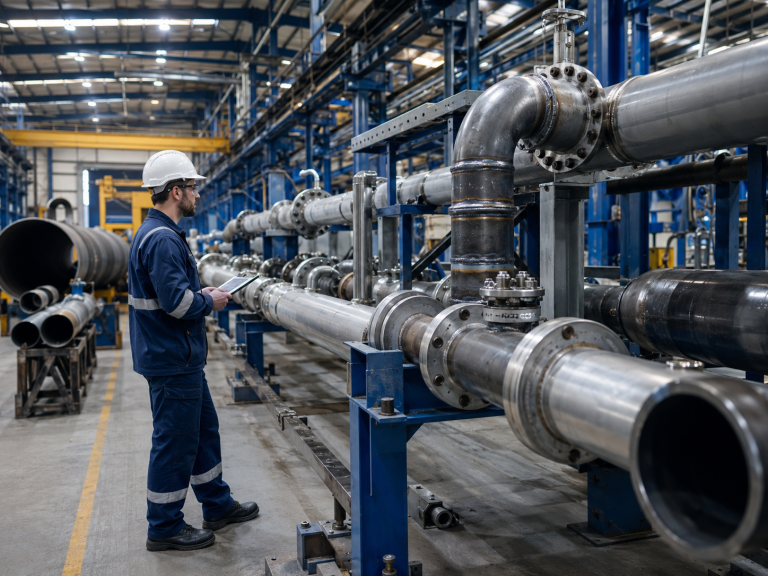
Industrial facilities often require specialised pipeline systems for water, drainage, process support, cleaning, cooling, and equipment connections.
These systems may operate under different pressures, temperatures, and environmental conditions.
Industrial pipeline services may include:
● Utility water pipelines
● Process water lines
● Equipment supply connections
● Washdown lines
● Cooling water pipelines
● Drainage networks
● Pump discharge lines
● Tank connections
● Overflow lines
● Underground pipelines
● External utility networks
● Valve stations
● Pipe support systems
An experienced industrial pipeline contractor in the UAE selects the pipe material, jointing method, support system, and testing procedure based on the intended application.
Industrial pipeline installation must also be coordinated with machinery, electrical services, structural elements, HVAC systems, and production layouts.
PPR Piping Installation in the UAE
Polypropylene Random Copolymer, commonly known as PPR, is widely used for water supply systems.
Professional PPR piping installation in the UAE may be suitable for:
● Cold-water distribution
● Hot-water systems
● Commercial plumbing networks
● Utility water lines
● Washroom connections
● Equipment water supply
● Internal building services
PPR pipes are commonly joined through heat fusion, creating a continuous connection between pipes and fittings.
Correct fusion technique is essential. Excessive heating, insufficient heating, poor alignment, or contaminated surfaces can weaken the joint and increase the risk of leakage.
During PPR installation, contractors should control:
● Cutting and pipe preparation
● Fusion temperature
● Heating time
● Joint alignment
● Insertion depth
● Cooling time
● Pipe support spacing
● Thermal expansion
● Pressure testing
A properly installed PPR system can provide reliable water distribution with clean, organised routing.
PEX Pipeline Installation
Cross-linked polyethylene, known as PEX, is commonly used in selected water distribution applications.
PEX piping is flexible and can reduce the number of fittings required in certain layouts.
PEX systems may be used for:
● Water supply connections
● Concealed plumbing routes
● Flexible branch connections
● Hot and cold-water systems
● Commercial plumbing applications
Professional PEX installation requires compatible fittings, approved jointing tools, correct support spacing, and suitable protection where pipes pass through walls, floors, or exposed areas.
The contractor must also ensure that the selected pipe type is suitable for the required temperature, pressure, and project specification.
UPVC Pipeline Installation
Unplasticised polyvinyl chloride, or UPVC, is commonly used for drainage, waste, vent, and selected water applications.
Professional PEX and UPVC pipeline installation may form part of a wider plumbing package depending on the project requirements.
UPVC piping is often used for:
● Soil systems
● Waste systems
● Vent piping
● Rainwater systems
● Underground drainage
● Equipment drain connections
● Condensate drainage
● External drainage networks
Correct UPVC installation includes:
● Accurate cutting
● Proper cleaning
● Correct joint preparation
● Suitable adhesive application
● Pipe alignment
● Correct drainage gradient
● Adequate supports
● Expansion allowances
● Accessible cleanouts
● Leakage testing
Drainage pipes must not be installed without proper slope and support. Sagging pipes can collect waste, restrict flow, and create repeated maintenance problems.
Pump Installation Services in Dubai
Pumps are essential in many commercial and industrial plumbing systems.
They are used to transfer water, increase pressure, remove wastewater, drain low-level areas, and support operational equipment.
Professional pump installation services in Dubai may include:
● Water transfer pumps
● Booster pumps
● Circulation pumps
● Sump pumps
● Drainage pumps
● Sewage pumps
● Dewatering pumps
● Irrigation pumps
● Process support pumps
● Duty and standby pump sets
Pump installation involves more than positioning the equipment and connecting pipes.
The contractor must consider:
● Required flow rate
● Total head pressure
● Pump duty
● Suction conditions
● Discharge pressure
● Pipe sizing
● Valve arrangement
● Non-return protection
● Vibration control
● Electrical supply
● Control panel requirements
● Automatic operation
● Maintenance access
● Drainage and ventilation
● Duty and standby sequencing
Incorrect pump selection or installation can lead to low pressure, excessive noise, vibration, overheating, seal failure, high energy consumption, or repeated breakdowns.
Booster Pump Systems
Booster pumps increase water pressure when the incoming supply is not sufficient for the building or facility.
They are commonly used in:
● Commercial buildings
● Warehouses
● Factories
● Staff accommodation
● Multi-level facilities
● Production areas
● Washdown systems
● Large plumbing networks
A booster system may include:
● Multiple pumps
● Pressure vessels
● Pressure sensors
● Control panels
● Variable-frequency drives
● Isolation valves
● Non-return valves
● Pressure gauges
● Flexible connectors
● Automatic duty rotation
Correct pump sequencing improves efficiency and reduces wear.
The system should be commissioned to maintain stable pressure without excessive cycling.
Transfer Pump Installation
Transfer pumps move water from one tank or location to another. They may be installed between:
● Underground and roof tanks
● Main storage and day tanks
● Collection pits and discharge points
● Process water tanks
● Utility water storage systems
A transfer pump installation should include correct level controls, dry-run protection, overflow coordination, isolation valves, and automatic operation where required.
Duty and standby arrangements may also be used in facilities where continuous water availability is critical.
Sump and Drainage Pump Installation
Sump pumps remove water from basements, pits, plant rooms, loading areas, underground spaces, and low-level drainage points.
They are important in locations where gravity drainage is not possible. A sump pump system may include:
● Collection pit
● Submersible pump
● Float switches
● Level sensors
● Control panel
● High-level alarm
● Non-return valve
● Isolation valve
● Discharge pipe
● Emergency overflow provisions
Regular maintenance is essential because sump systems often remain inactive until water enters the pit. A failed pump or blocked float switch may only become visible during an emergency.
Sewage Lifting Systems
In some facilities, wastewater must be pumped to a higher-level drainage network. A sewage lifting system may include:
● Collection tank
● Sewage pumps
● Level controls
● Alarm systems
● Discharge pipework
● Non-return valves
● Isolation valves
● Ventilation
● Access covers
● Control panels
These systems require careful design, proper sealing, safe access, and regular maintenance.
Poorly maintained sewage pumps can cause overflow, odour, hygiene problems, and facility shutdowns.
Plumbing Services for Machinery and Industrial Equipment
Industrial machinery often requires dedicated plumbing and drainage connections. These may include:
● Cooling water supply
● Process water connections
● Washdown points
● Equipment drainage
● Condensate discharge
● Tank filling lines
● Overflow connections
● Pump connections
● Cleaning system pipelines
● Utility water connections
A plumbing contractor should coordinate closely with machinery suppliers and production teams to verify:
● Connection locations
● Pipe sizes
● Pressure requirements
● Flow requirements
● Drainage levels
● Water quality requirements
● Valve locations
● Maintenance access
● Equipment movement and vibration
Incorrectly positioned connections can delay machinery installation and require expensive modifications.
Commercial Plumbing Services in the UAE
Commercial facilities require dependable plumbing systems to support occupants, customers, staff, cleaning activities, kitchens, washrooms, and building operations.
Commercial plumbing services in the UAE
may include:
● Water supply installation
● Drainage systems
● Sanitary fixtures
● Washroom plumbing
● Pantry and kitchen connections
● Water heater installation
● Pump systems
● Water tank connections
● External drainage
● Plumbing maintenance
● Leak repairs
● Pipeline replacement
● Testing and commissioning
Commercial plumbing systems should be designed for regular use, easy maintenance, water efficiency, and hygiene.
Typical commercial projects include:
● Offices
● Retail units
● Showrooms
● Warehouses
● Restaurants
● Commercial kitchens
● Staff facilities
● Mixed-use developments
● Educational facilities
● Workshops
Plumbing for Industrial Facilities
Industrial plumbing systems must support both building requirements and operational processes.
Factories and production facilities may require:
● High-volume water distribution
● Multiple washdown points
● Process equipment connections
● Utility water pipelines
● Floor drainage
● Trench drainage
● Pumping systems
● Water storage
● Wastewater collection
● External underground networks
● Emergency water provisions
Industrial plumbing must be strong, accessible, and suitable for the facility’s operating conditions.
An experienced contractor understands that pipeline routing must not interfere with production lines, forklifts, machinery, maintenance zones, or future expansion.
Plumbing for Food Processing and Bottling Plants
Food processing and bottling facilities have strict operational and hygiene requirements.
Plumbing systems may support:
● Production equipment
● Cleaning stations
● Washdown areas
● Processing lines
● Filling machines
● Utility rooms
● Staff hygiene facilities
● Floor drainage
● Equipment drainage
● Water storage and pumping
Pipeline materials, fittings, valves, and drainage layouts should be selected according to the intended use and approved project requirements.
Drainage must be designed to prevent standing water and support regular cleaning.
Plumbing installations should also be coordinated with hygienic finishes, machinery layouts, and maintenance access.
Plumbing for Poultry Farms and Agricultural Facilities
Poultry farms and agricultural facilities require reliable water systems for animal care, cleaning, cooling, and facility operations.
Typical services may include:
● Water distribution pipelines
● Drinking water supply
● Tank connections
● Booster pumps
● Cleaning lines
● Drainage networks
● Cooling system water connections
● Equipment supply points
● External underground pipelines
● Sewage and waste systems
These environments may expose pipes and equipment to dust, moisture, chemicals, and frequent cleaning.
Materials and installation methods must be selected to support durability and safe operation.
Plumbing for Warehouses and Logistics Facilities
Warehouses may require plumbing services for:
● Staff washrooms
● Pantry areas
● Cleaning points
● Fire system coordination
● External drainage
● Loading areas
● Floor drains
● Water tanks
● Pump rooms
● Workshop areas
Large warehouse roofs and external yards may also require carefully planned stormwater systems.
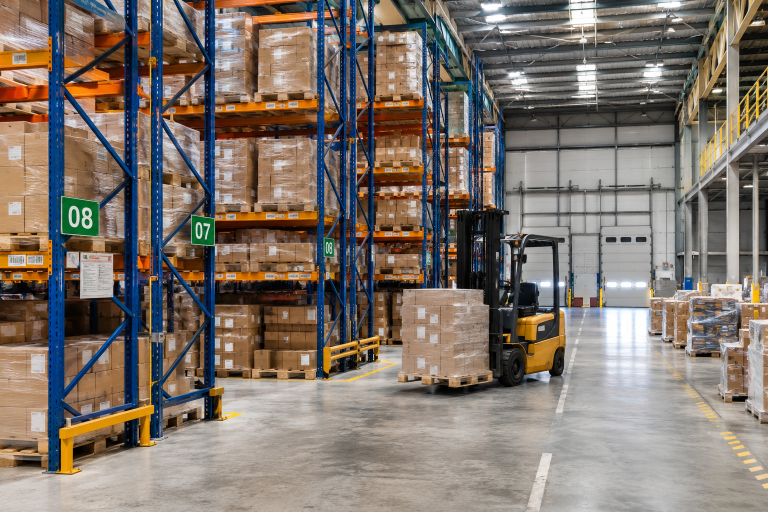
Drainage routes should remain clear of racking, loading operations, vehicle movement, and material storage.
Water Storage Tank Installation and Connections
Many commercial and industrial facilities use water storage tanks to maintain supply and manage demand.
Plumbing work related to water tanks may include:
● Inlet connections
● Outlet connections
● Overflow pipes
● Drain connections
● Vent pipes
● Level controls
● Transfer pump connections
● Booster pump connections
● Isolation valves
● Access arrangements
Tank connections should be clearly organised and accessible.
Overflow and drainage pipes must be routed to safe discharge points.
Level sensors and pump controls should be tested to prevent dry running, overflow, and unnecessary pump operation.
Valves and Plumbing Accessories
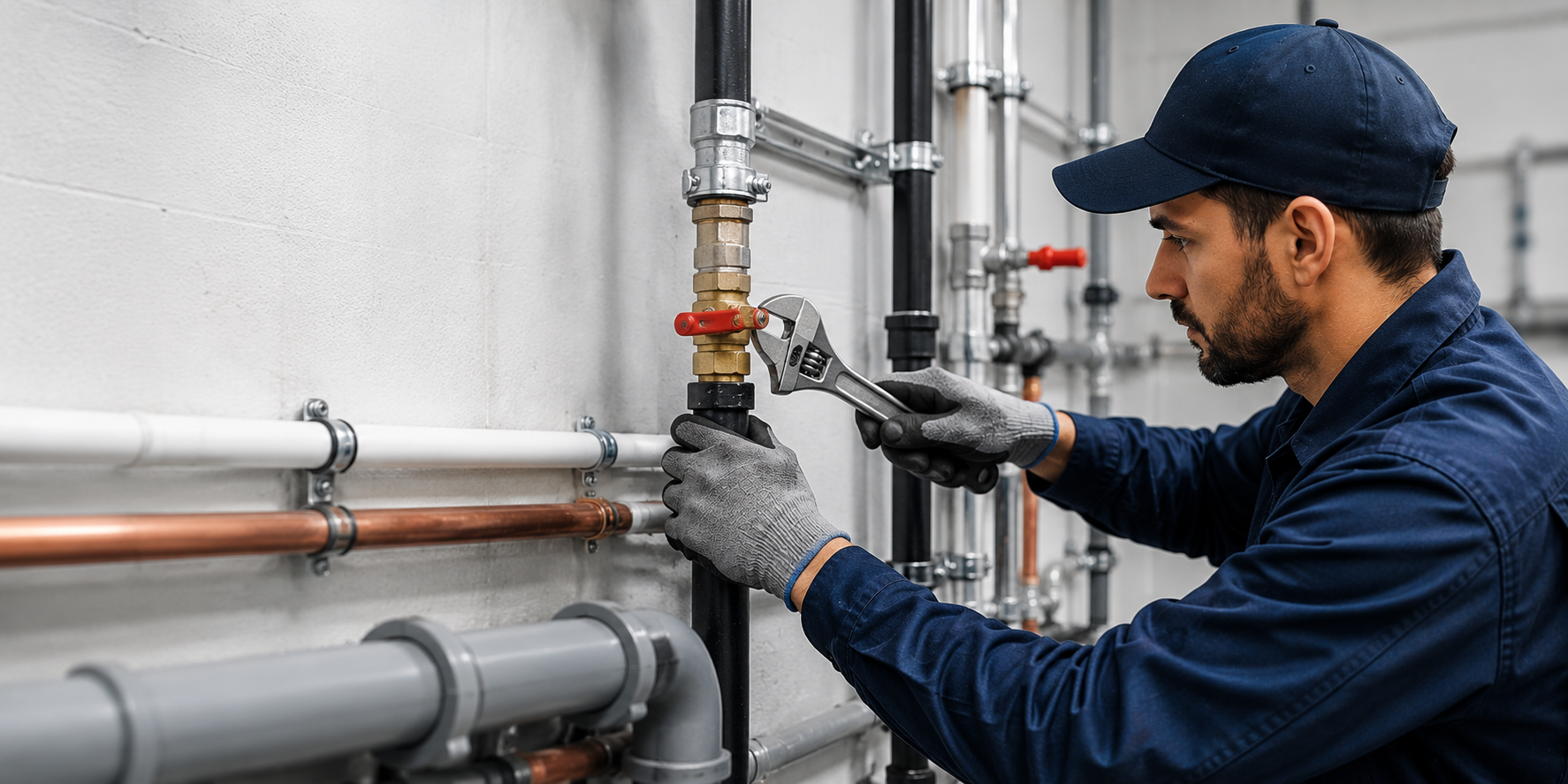
Valves allow systems to be controlled, isolated, balanced, and maintained. Common plumbing valves and accessories include:
● Gate valves
● Ball valves
● Butterfly valves
● Check valves
● Pressure-reducing valves
● Float valves
● Strainers
● Pressure gauges
● Flexible connectors
● Air release valves
● Drain valves
● Control valves
Valves should be installed in accessible locations and clearly identified.
Poor valve placement can make maintenance difficult and may require large sections of a system to be shut down for minor repairs.
Pipe Supports and Installation Quality
Pipe supports are essential for maintaining pipeline alignment and preventing movement.
A plumbing system may fail even when pipe materials and joints are correct if supports are inadequate.
Proper pipe support helps prevent:
● Sagging
● Joint stress
● Vibration
● Pipe movement
● Excessive noise
● Incorrect drainage slope
● Damage to fittings
● Premature leakage
Support spacing depends on the pipe material, size, temperature, and installation orientation.
Pipes should also be protected where they pass through walls, slabs, or exposed areas.
Plumbing Testing and Commissioning
Plumbing installation is not complete until the system has been inspected, tested, flushed, and commissioned.
Testing confirms that pipelines, joints, valves, pumps, and fixtures operate correctly. A plumbing testing and commissioning process may include:
● Visual inspection
● Pipe alignment checks
● Support inspections
● Pressure testing
● Leakage testing
● Drainage flow testing
● Pump startup
● Pressure verification
● Flow verification
● Float switch testing
● Level control testing
● Duty and standby pump testing
● Alarm testing
● Valve operation checks
● Flushing and cleaning
● Equipment connection checks
● Final commissioning records
Testing should be completed before pipelines are concealed wherever possible. This allows faults to be repaired before ceilings, walls, floors, or finishes are closed.
Pressure Testing
Pressure testing checks the strength and leak resistance of water supply pipelines.
The exact test method depends on the pipe material, system specification, and project requirements.
During pressure testing, the contractor should verify:
● Test pressure
● Test duration
● Gauge condition
● Joint stability
● Valve condition
● Pressure loss
● Visible leakage
● Pipe movement
Any identified leakage should be repaired and the system retested before approval.
Drainage Flow Testing
Drainage flow testing helps confirm that water moves correctly through the system without blockage, backflow, or leakage.
The contractor should check:
● Pipe gradients
● Flow direction
● Floor drain discharge
● Cleanout access
● Joint leakage
● Venting
● Pumped drainage operation
● Inspection chamber flow
● External connection points
Drainage testing is particularly important before floor finishes and ceilings are completed.
Pump Testing and Commissioning
Pump commissioning confirms that the selected pump operates according to the required duty.
Testing may include:
● Pump rotation
● Flow rate
● Suction condition
● Discharge pressure
● Motor current
● Vibration
● Noise
● Automatic start and stop
● Duty and standby operation
● Pressure switch operation
● Level control operation
● Alarm functions
● Leakage inspection
Commissioning also verifies that valves are in the correct position and that the system is free from trapped air or blockage.
Plumbing Maintenance Services in Dubai
Regular maintenance helps prevent leaks, pressure problems, pump failures, blockages, and unexpected shutdowns.
Professional plumbing maintenance services in Dubai may include:
● Pipeline inspections
● Leak detection
● Valve inspections
● Pump maintenance
● Drain cleaning
● Water pressure checks
● Tank connection inspections
● Float valve testing
● Pipe support checks
● Fixture repairs
● Sump pump testing
● Sewage pump servicing
● Pressure vessel inspection
● Emergency plumbing support
● Pipeline replacement
A planned maintenance programme is especially important for industrial facilities where plumbing failures may affect production or hygiene.
Preventive Plumbing Maintenance
Preventive maintenance is carried out before a failure occurs. Typical activities include:
● Inspecting visible pipelines
● Checking joints and fittings
● Testing isolation valves
● Cleaning strainers
● Inspecting pumps
● Checking motor current
● Testing pressure controls
● Testing level switches
● Cleaning drainage lines
● Inspecting floor drains
● Checking water pressure
● Inspecting tanks and connections
● Verifying standby pump operation
● Updating maintenance records
Preventive maintenance reduces emergency repairs and supports longer equipment life.
Corrective Plumbing Maintenance
Corrective maintenance is required when a fault has already developed. Common plumbing faults include:
● Water leakage
● Low pressure
● Pipe blockage
● Pump failure
● Continuous pump operation
● Overflowing tanks
● Faulty float valves
● Damaged fittings
● Drainage odour
● Backflow
● Noisy pipelines
● Vibration
● Corroded components
A qualified contractor should identify the root cause rather than completing only a temporary repair.
For example, a repeatedly blocked drain may be caused by incorrect pipe slope, inadequate pipe size, or poor venting rather than a one-time obstruction.
Emergency Plumbing Repairs
Plumbing emergencies can disrupt operations and damage equipment, materials, and finishes.
Emergency issues may include:
● Burst pipelines
● Major leaks
● Pump breakdowns
● Drainage overflow
● Sewage backup
● Tank overflow
● Failed valves
● Underground pipeline damage
● Loss of water supply
Facilities should know the locations of isolation valves, pump controls, and emergency shutoff points.
Clear labelling and accurate as-built drawings can reduce response time during an emergency.
Common Plumbing Problems in Commercial and Industrial Facilities
Low Water Pressure
Low pressure may be caused by undersized pipes, blocked strainers, pump faults, pressure-control issues, or increased facility demand.
Repeated Leakage
Frequent leakage may result from poor jointing, excessive pressure, vibration, pipe movement, material incompatibility, or damaged supports.
Drainage Blockages
Blockages may be caused by incorrect slope, unsuitable pipe size, waste accumulation, poor maintenance, or inadequate cleaning access.
Pump Short Cycling
A pump that starts and stops frequently may have pressure vessel, control, sensor, or system leakage problems.
Excessive Pump Noise
Noise may indicate vibration, cavitation, poor alignment, incorrect valve settings, or unsuitable operating conditions.
Tank Overflow
Overflow may be caused by failed level sensors, defective float valves, control panel faults, or incorrect pump operation.
Drainage Odours
Odours may result from dry traps, poor venting, blocked lines, damaged seals, or incorrectly connected drainage systems.
Corrosion and Material Damage
Pipe damage may develop when unsuitable materials are exposed to chemicals, heat, moisture, or aggressive operating conditions.
Regular inspection helps identify these issues before they become major failures.
Plumbing System Upgrades and Facility Expansion
Facilities often add machinery, production lines, washrooms, cleaning stations, storage tanks, or process equipment.
These additions may increase water demand or drainage discharge beyond the capacity of the original system.
Before expanding a plumbing network, the contractor should assess:
● Existing pipe sizes
● Available water pressure
● Pump capacity
● Tank capacity
● Drainage capacity
● Existing valve arrangements
● Pipeline condition
● Available connection points
● Equipment requirements
● Future expansion plans
System upgrades may include:
● Larger pipelines
● New branch connections
● Additional pumps
● New storage tanks
● Booster system upgrades
● Drainage modifications
● New sump systems
● Replacement valves
● Underground pipeline extensions
● Process equipment connections
A technical assessment prevents unsuitable connections and reduces the risk of pressure loss, overflow, and pump failure.
How to Choose the Right Plumbing Contractor in Dubai
Selecting the right contractor is essential for system performance, safety, and long-term reliability.
Clients should evaluate:
● Experience with industrial and commercial projects
● Knowledge of different piping materials
● Pump installation capability
● Understanding of water supply and drainage systems
● Qualified plumbing workforce
● Site supervision
● Testing and commissioning procedures
● Safety practices
● Quality-control systems
● Maintenance support
● Documentation standards
● Ability to coordinate with other MEP contractors
● Experience in operational facilities
● Emergency response capability
The contractor should also provide a clearly defined scope covering materials, installation, supports, valves, testing, commissioning, and handover.
Choosing a contractor based only on the lowest price may lead to hidden costs through leakage, rework, pump problems, repeated blockages, and early system failure.
Why Choose JBT World for Plumbing Services?
JBT Building Contracting LLC, known as JBT World, provides integrated plumbing, MEP, industrial construction, machinery installation, automation, and facility maintenance services across the UAE.
Our plumbing capabilities support commercial and industrial projects through different stages of execution.
Our services include:
● Water supply systems
● Drainage systems
● PPR piping installation
● PEX and UPVC pipeline installation
● Industrial pipeline networks
● Pump installation
● Booster pump systems
● Transfer pump systems
● Sump and sewage pumps
● Tank connections
● Machinery plumbing connections
● Valve installation
● Pressure testing
● Drainage testing
● Pump commissioning
● Preventive maintenance
● Emergency plumbing repairs
● Plumbing system upgrades
Our approach focuses on technical coordination, safe installation, suitable material selection, structured testing, and reliable long-term performance.
Because plumbing systems are closely connected with electrical, mechanical, automation, and machinery requirements, JBT World coordinates the complete scope to reduce conflicts and improve project efficiency.
Conclusion
Reliable plumbing infrastructure is essential for the safe and efficient operation of commercial and industrial facilities.
From plumbing installation in Dubai and water supply networks to drainage systems, industrial pipelines, and pump installation, every component must be correctly planned, installed, tested, and maintained.
Working with an experienced plumbing contractor in Dubai helps reduce leakage, pressure problems, pump failures, drainage blockages, and operational interruptions.
For companies requiring dependable commercial plumbing services in the UAE, the right contractor should provide more than basic pipe installation. The contractor should understand water demand, drainage flow, pump performance, equipment connections, maintenance requirements, and the operational needs of the facility.
JBT World delivers coordinated plumbing solutions designed to support system reliability, efficient project execution, and long-term operational performance.
Partner with JBT World
Looking for professional industrial plumbing services in the UAE?
JBT World provides plumbing and pipeline solutions for factories, warehouses, food processing plants, bottling facilities, poultry farms, commercial buildings, workshops, machinery installations, and industrial projects across the UAE.
Contact JBT World to discuss your requirements for water supply and drainage systems, PPR, PEX or UPVC pipeline installation, pump installation, plumbing maintenance, system upgrades, or emergency repairs.