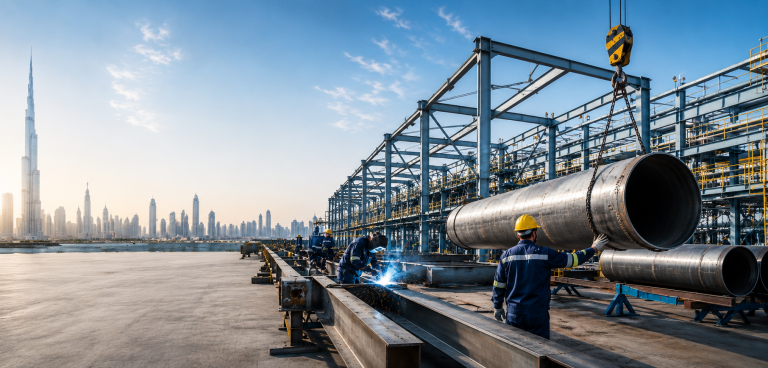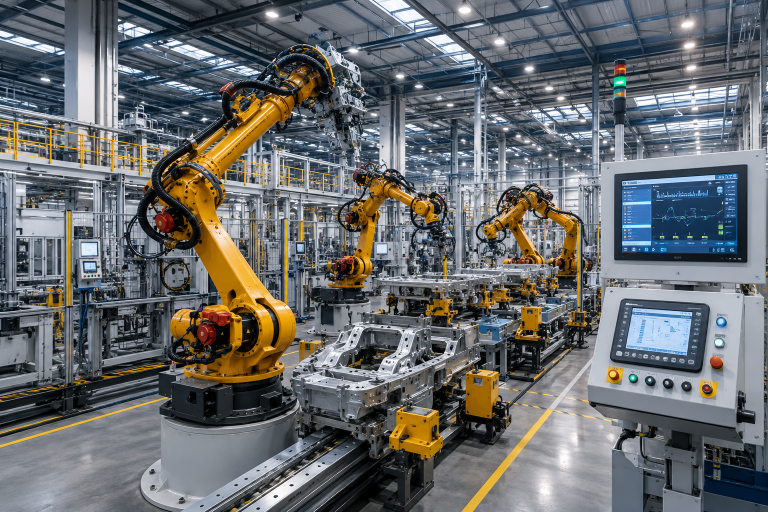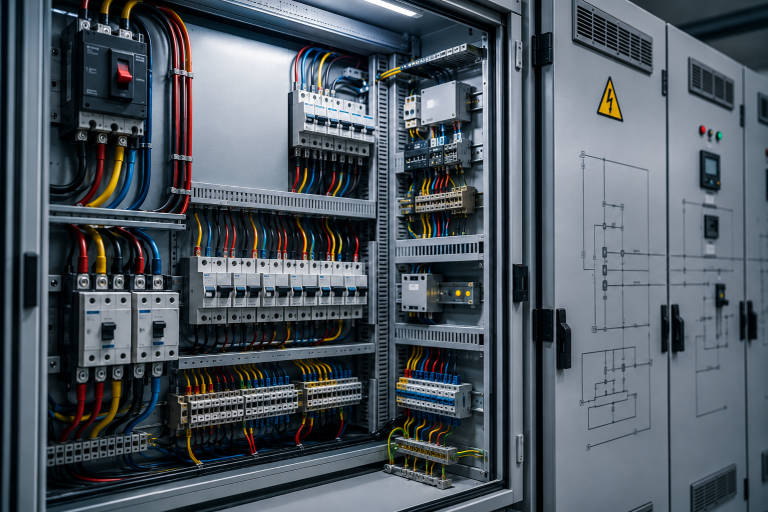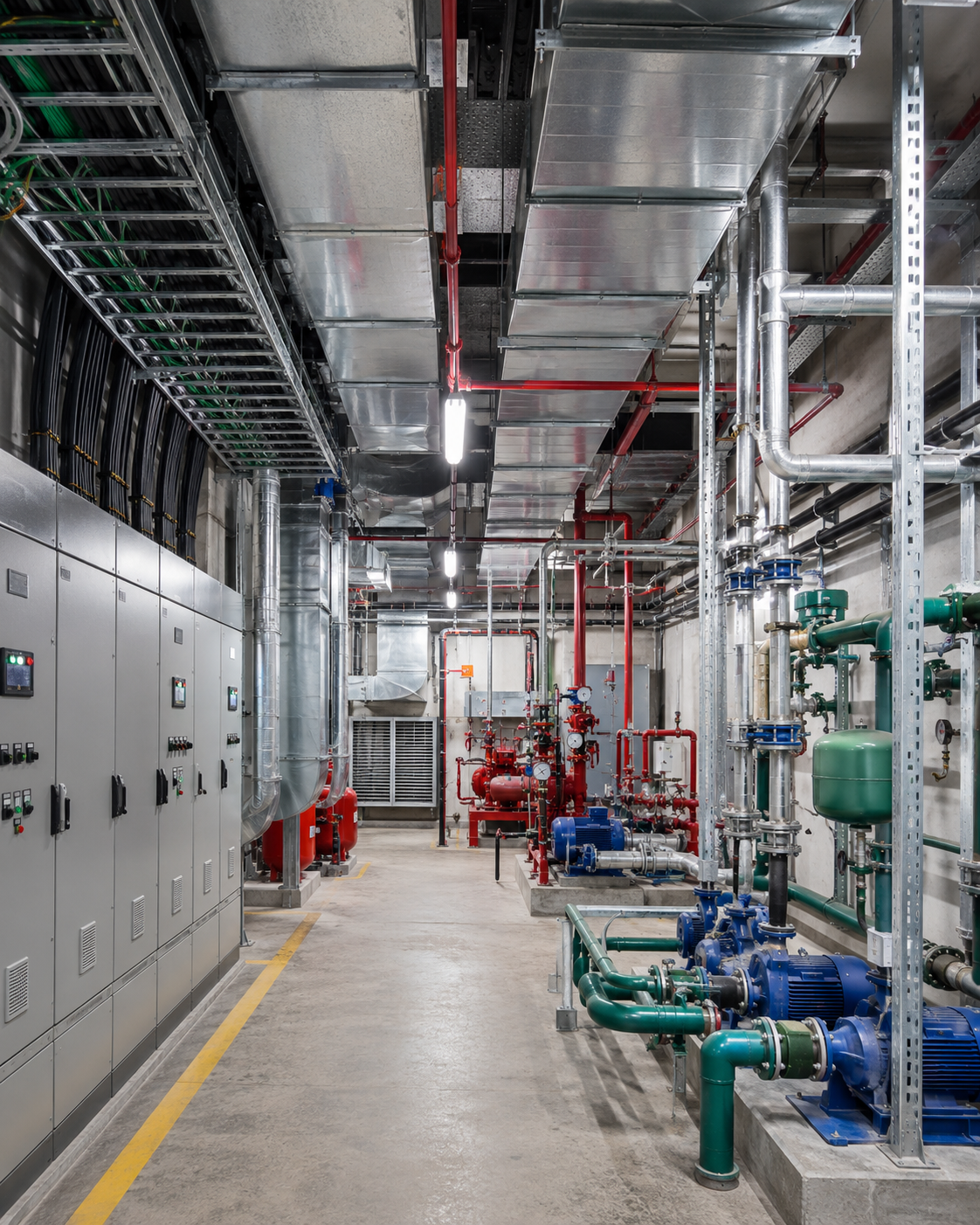
Mechanical, electrical, and plumbing systems are the operational backbone of every industrial, commercial, and infrastructure project. From HVAC and electrical distribution to water supply, drainage, fire protection, automation, and control systems, MEP performance directly affects safety, energy efficiency, productivity, and long-term operating costs.
In the UAE’s fast-paced construction environment, managing separate contractors for each technical discipline can create communication gaps, coordination issues, delays, and unexpected costs. This is why many developers, consultants, facility owners, and industrial operators are choosing integrated, end-to-end MEP solutions in the UAE.
Working with a single, experienced MEP contractor in the UAE allows all mechanical, electrical, and plumbing activities to be planned, executed, tested, and commissioned under one coordinated scope. This integrated approach improves accountability, reduces technical conflicts, and helps projects move from design coordination to final handover more efficiently.
What Are End-to-End MEP Solutions?
End-to-end MEP contracting covers the complete lifecycle of mechanical, electrical, and plumbing works within a project.
Rather than appointing different companies for design coordination, procurement, installation, testing, and maintenance, the client works with one contractor responsible for the entire MEP package.
A complete MEP scope may include:
● MEP design review and technical coordination
● Shop drawings, material submittals, and approvals
● Procurement of equipment and systems
● HVAC installation and ventilation works
● Electrical power distribution and lighting systems
● Plumbing, water supply, and drainage systems
● Fire alarm and fire protection coordination
● Low-current systems and building automation
● Machinery utility connections
● Testing, balancing, and system integration
● MEP installation and commissioning
● Final documentation and project handover
● Preventive and corrective maintenance support
A reliable turnkey MEP contractor in Dubai manages these activities as one connected process rather than as separate, isolated packages.
Why Integrated MEP Contracting Matters
MEP systems are highly interconnected. Electrical systems power HVAC equipment. Plumbing and drainage services must coordinate with structural layouts. Automation systems depend on correctly installed sensors, panels, cables, and mechanical equipment.
When these activities are handled by multiple independent contractors, even a small coordination issue can affect several systems.
For example, an incorrectly positioned HVAC duct may conflict with cable trays, fire protection lines, or structural elements. A delayed electrical panel installation may prevent equipment testing. Poor coordination between mechanical and plumbing teams may affect plant room access or maintenance clearances.
Integrated MEP contracting reduces these risks by bringing all technical disciplines under one management and coordination structure.
1. Improved Coordination Between MEP Disciplines
One of the biggest advantages of end-to-end MEP contracting is stronger coordination.
Mechanical, electrical, and plumbing services must fit within limited ceiling voids, shafts, plant rooms, production areas, and service corridors. Without proper planning, clashes can lead to rework, material waste, and construction delays.
An integrated MEP company in Dubai coordinates drawings, installation sequences, equipment locations, access requirements, and testing activities before work progresses on site.
This helps ensure that:
● HVAC ducts do not clash with electrical containment
● Plumbing lines remain accessible for maintenance
● Equipment has sufficient operating and service clearance
● Electrical loads match mechanical equipment requirements
● Control systems are compatible with installed machinery
● MEP services align with architectural and structural elements
Better coordination supports smoother installation and reduces costly changes during later project stages.
2. Faster Project Delivery
When multiple contractors are involved, project teams often spend significant time managing interfaces, approvals, dependencies, and responsibility gaps.
Integrated MEP contracting simplifies this process.
A single contractor can coordinate procurement, manpower, installation, testing, and commissioning through one project programme. Work sequences can be adjusted quickly based on site conditions without waiting for several different subcontractors to agree on responsibilities.
For clients seeking dependable MEP services in Dubai, this unified approach can improve schedule control and help critical project milestones remain on track.
It is especially valuable for industrial facilities, factories, warehouses, food processing plants, bottling plants, poultry farms, and commercial developments where delayed utilities can postpone equipment installation or operational startup.
3. Clearer Accountability
Fragmented contracting often creates uncertainty when a technical problem occurs.
A mechanical contractor may attribute an equipment issue to the electrical supply. The electrical contractor may claim the problem is related to controls. The automation contractor may identify an installation problem. These situations can delay troubleshooting and create disputes.
With an end-to-end MEP package, one contractor remains responsible for coordinating the complete system.
This creates a clear line of accountability from installation through testing and handover. The contractor is responsible not only for completing individual tasks but also for ensuring that the connected systems operate correctly together.
For project owners, this means fewer coordination disputes, quicker decision-making, and more efficient problem resolution.
4. Better Cost Control
Selecting the lowest quotation for each individual MEP package may appear cost-effective at the beginning of a project. However, fragmented scopes can create hidden costs through rework, duplication, delayed access, incompatible equipment, and unplanned variations.
An integrated MEP contractor in the UAE can evaluate the complete scope and identify opportunities to optimise materials, installation methods, equipment selection, and manpower deployment.
Cost efficiency may be improved through:
● Consolidated procurement
● Reduced duplication of site resources
● Better material planning
● Coordinated installation sequences
● Fewer design and service clashes
● Reduced rework
● More accurate project forecasting
● Controlled testing and commissioning procedures
End-to-end contracting does not simply reduce the number of suppliers. It improves the overall commercial control of the MEP package.
5. Consistent Quality Across All Systems
MEP quality depends on more than the installation of individual components. It depends on how effectively all components operate as an integrated system.
A project may include high-quality HVAC equipment, electrical panels, pumps, controls, and plumbing fixtures. However, if these systems are installed without proper coordination, testing, and calibration, the facility may still experience performance problems.
An experienced industrial MEP contractor in the UAE follows consistent procedures across all disciplines, including:
● Material inspections
● Installation quality checks
● Equipment alignment and positioning
● Cable testing
● Pressure testing
● Duct leakage testing
● Flushing and cleaning
● Air and water balancing
● Control panel verification
● Functional performance testing
● Snag rectification
● Final commissioning
This structured approach helps ensure that completed systems meet project specifications and operational requirements.
6. More Effective Testing and Commissioning
Testing and commissioning are critical stages of every MEP project.
These activities confirm that equipment has been installed correctly, systems communicate properly, safety controls function as intended, and the facility is ready for operation.
When testing is divided among several contractors, problems may remain unresolved because each company focuses only on its own scope. Integrated commissioning provides a broader view of system performance.
A complete MEP installation and commissioning process may include:
● Electrical continuity and insulation testing
● Panel energisation
● Equipment startup
● HVAC testing and balancing
● Pump testing
● Water pressure testing
● Drainage flow testing
● Control system integration
● Sensor and alarm verification
● Emergency shutdown testing
● Performance monitoring
● Final client demonstrations
A coordinated commissioning team can identify system-level issues more quickly and ensure that mechanical, electrical, plumbing, and automation systems work together as designed.
7. Reduced Operational Risk
Poorly coordinated MEP systems can create long-term problems after project handover.
These may include high energy consumption, equipment breakdowns, uncomfortable indoor conditions, water leakage, electrical faults, inaccessible services, control failures, and frequent maintenance requirements.
End-to-end MEP contracting reduces operational risk by considering installation quality, system access, maintenance requirements, and lifecycle performance during project execution.
This is particularly important for industrial and production facilities where MEP failures can interrupt operations, affect product quality, or create safety concerns.
Facilities such as food processing plants, poultry farms, warehouses, commercial buildings, factories, and bottling plants require dependable systems that can support continuous operation.
8. Better Integration with Industrial Equipment
Industrial MEP projects often involve more than standard building services.
Factories and production facilities may require specialised utility connections for machinery, compressed air, chilled water, ventilation, drainage, power distribution, automation, process equipment, and control systems.
A capable industrial MEP contractor in the UAE must understand both building services and operational equipment requirements.
Integrated coordination helps ensure that:
● Power supplies match machinery loads
● Equipment connections are correctly positioned
● Ventilation supports production requirements
● Drainage systems handle operational discharge
● Control panels communicate with machinery
● Utility routes remain accessible
● Equipment can be tested safely
● Future maintenance can be completed efficiently
This makes end-to-end MEP contracting especially valuable for industrial construction and machinery installation projects.
9. Streamlined Communication
Project communication becomes more efficient when the client, consultant, and main contractor coordinate with one MEP delivery team.
Instead of tracking separate mechanical, electrical, plumbing, controls, and commissioning contractors, stakeholders can manage progress through a single point of contact.
This improves:
● Technical communication
● Progress reporting
● Approval tracking
● Site coordination
● Variation management
● Quality documentation
● Testing schedules
● Handover preparation
For clients requiring commercial MEP services in Dubai, streamlined communication can reduce administrative workload and support faster decisions.
10. Stronger Post-Handover Support
The value of an integrated MEP contractor continues after installation is completed.
Because the same company understands the project drawings, equipment, installation methods, test results, and system configuration, it can provide more effective maintenance and troubleshooting support.
Post-handover services may include:
● Preventive maintenance
● Emergency repairs
● Equipment inspections
● HVAC servicing
● Electrical testing
● Plumbing repairs
● Control system troubleshooting
● System upgrades
● Energy-efficiency improvements
● Facility modification works
This continuity helps facility owners maintain reliable operations and protect the long-term value of their MEP investment.
End-to-End MEP Solutions for Different Industries
Integrated MEP delivery can be adapted to the specific requirements of different sectors.
Industrial Facilities
Factories and production plants require robust power distribution, ventilation, machinery connections, automation systems, process utilities, and reliable maintenance access.
Food Processing and Bottling Plants
These facilities require hygienic drainage, controlled ventilation, dependable electrical systems, specialised utility connections, and coordinated equipment installation.
Poultry Farms and Agricultural Facilities
Poultry and livestock environments require carefully controlled ventilation, cooling, water distribution, lighting, automation, environmental monitoring, and backup systems.
Warehouses and Logistics Facilities
Warehouses require efficient lighting, ventilation, fire protection coordination, power distribution, loading-area services, and support for material-handling equipment.
Commercial Buildings
Offices, retail facilities, showrooms, and mixed-use developments require energy-efficient HVAC, lighting, plumbing, low-current systems, and reliable building controls.
Choosing a contractor with industry-specific experience helps ensure that the MEP package supports the facility’s actual operational needs rather than applying a generic solution.
How to Choose the Right MEP Contractor in the UAE
Selecting the right MEP partner is a critical project decision.
Clients should evaluate more than pricing alone. The contractor should demonstrate technical capability, site execution strength, safety awareness, quality control, and relevant industry experience.
Key factors to assess include:
● Experience with similar projects
● Mechanical, electrical, and plumbing expertise
● Industrial and commercial project capabilities
● Engineering and coordination resources
● Procurement and supplier management
● Site supervision and workforce capacity
● Safety procedures
● Quality assurance and quality control systems
● Testing and commissioning capability
● Documentation and handover standards
● Maintenance and after-sales support
A dependable turnkey MEP contractor in Dubai should be able to manage the complete project scope while maintaining clear communication, technical accuracy, and schedule control.
Why Choose JBT World for MEP Services in Dubai?
JBT Building Contracting LLC, also known as JBT World, provides integrated engineering and contracting solutions for industrial and commercial projects across the UAE.
Our capabilities include mechanical, electrical, and plumbing services, industrial construction, machinery installation, automation support, facility maintenance, and technical project execution.
We understand that successful MEP delivery requires more than completing individual installations. It requires coordination between systems, disciplined site management, industry-specific planning, structured testing, and dependable post-handover support.
JBT World supports projects from initial technical coordination through procurement, installation, testing, commissioning, and maintenance. Our integrated approach helps clients reduce coordination risks, improve project efficiency, and achieve reliable operational performance.
Conclusion
End-to-end MEP contracting provides a more coordinated, accountable, and efficient approach to project delivery.
By managing mechanical, electrical, plumbing, controls, testing, and commissioning under one integrated scope, clients can reduce delays, control costs, improve quality, and minimise long-term operational risks.
Whether the project involves an industrial facility, commercial building, food processing plant, poultry farm, warehouse, bottling plant, or machinery installation, choosing an experienced MEP contractor in the UAE can significantly influence the project’s performance.
For dependable MEP services in Dubai, JBT World delivers technically coordinated solutions designed around safety, efficiency, operational reliability, and long-term value.
Partner with JBT World
Looking for a reliable MEP company in Dubai for your next industrial or commercial project?
Contact JBT World to discuss your requirements for end-to-end MEP solutions, turnkey installation, testing, commissioning, machinery integration, or facility maintenance across the UAE